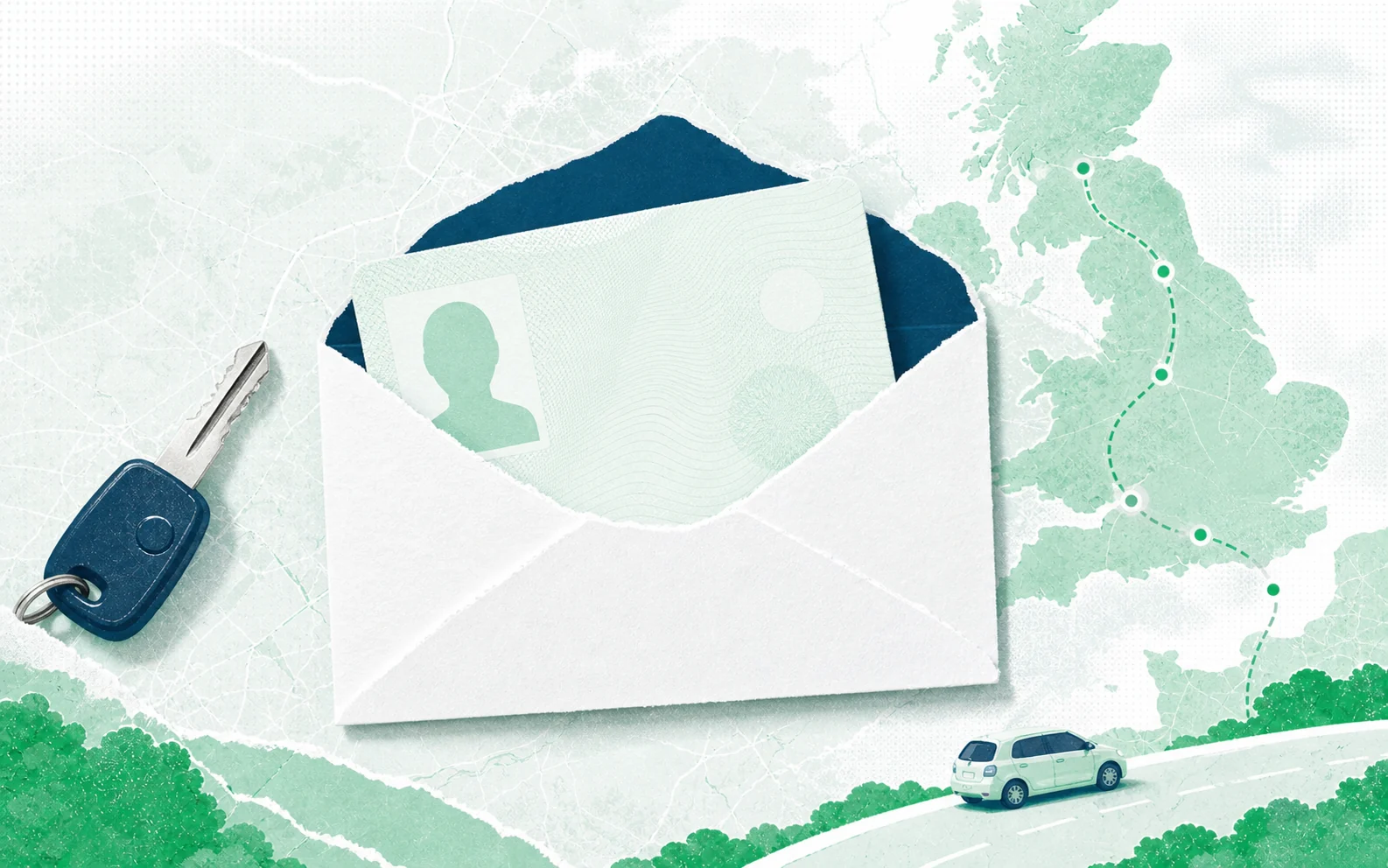
To apply for a UK provisional driving licence, use the GOV.UK online service, which costs £34 and is the quickest route. You can apply from the age of 15 years and 9 months, and you will need an identity document such as a UK passport, your addresses for the last three years, and your National Insurance number. Most licences arrive within one to two weeks.
Getting your provisional is always the first step in learning to drive, because you cannot take a lesson on a public road or book any test without it. This guide walks through how to apply, what you need, how much it costs, and exactly what the licence lets you do once it lands.
How do you apply for a provisional licence?
Apply online through the official GOV.UK service, which is faster and cheaper than the postal route. The whole application takes about fifteen minutes if you have your documents ready, and you pay the £34 fee by debit or credit card at the end.
You can also apply by post using form D1, available from most Post Office branches, which costs £43 and takes longer to process. There is no advantage to the postal route unless you cannot apply online, so most learners use the website. Beware of unofficial “processing” sites that add their own fee on top; always start from GOV.UK directly. Our full how to learn to drive guide puts this step in the context of the whole journey.
When can you apply for a provisional licence?
You can apply from the age of 15 years and 9 months. This early window exists so your licence is ready the moment you can legally start driving, which is your 17th birthday for a car, or your 16th if you receive the enhanced rate of the mobility component of Personal Independence Payment.
Applying early is worth doing. You can hold the physical licence before you are allowed to drive, so getting it out of the way months in advance means no waiting around when you are ready for your first lesson. There is no downside to applying as soon as you reach 15 years and 9 months, other than the fee.
What do you need to apply?
You need to be a resident of Great Britain, meet the minimum eyesight standard, and have a few documents to hand before you start. The online service is quickest when you can prove your identity with a valid UK passport, though other identity documents are accepted.
Have these ready before you begin:
- An identity document, ideally a valid UK passport.
- Your addresses for the last three years, with no gaps.
- Your National Insurance number, if you have one.
- A debit or credit card to pay the £34 fee.
The eyesight requirement is straightforward: you must be able to read a car number plate from 20 metres, with glasses or contact lenses if you need them. If you wear glasses or lenses to meet this standard, you must wear them whenever you drive, including in your test. It is worth checking your eyesight against a number plate at a real distance before you apply, so you know whether you need corrective lenses to drive.
How much does a provisional licence cost?
A provisional licence costs £34 online or £43 by post. That is a one-off fee; there is nothing more to pay to the DVSA when your provisional becomes a full licence after you pass, as the upgrade is issued automatically and free of charge.
| Method | Cost | Typical processing time |
|---|---|---|
| Online (GOV.UK) | £34 | 1 to 2 weeks (allow up to 3) |
| By post (form D1) | £43 | Longer than online |
The £34 online fee is a small part of the overall cost of learning to drive, where lessons dominate the budget. For the full picture, see how much driving lessons cost.
How long does a provisional licence take to arrive?
Online applications usually arrive within one to two weeks, and the DVSA advises allowing up to three weeks to be safe. Postal applications take longer. You cannot drive on a public road or book a theory or practical test until the physical card is in your hands.
Because the licence gates everything that follows, apply well before you intend to start learning. If you are booking lessons for a specific date, or you turn 17 soon, give yourself a comfortable buffer so a processing delay does not push back your first lesson. Applying from 15 years and 9 months removes this risk entirely.
What can you do with a provisional licence?
A provisional licence lets you take lessons with an approved driving instructor and practise privately with a suitable supervising driver. It does not let you drive alone. Understanding the limits keeps you legal and insured while you learn.
With a provisional you can:
- Take lessons with a qualified approved driving instructor (ADI) in a dual-control car.
- Practise privately with someone over 21 who has held a full licence for the relevant vehicle category for at least three years.
- Drive on the motorway, but only with an approved driving instructor in a dual-control car.
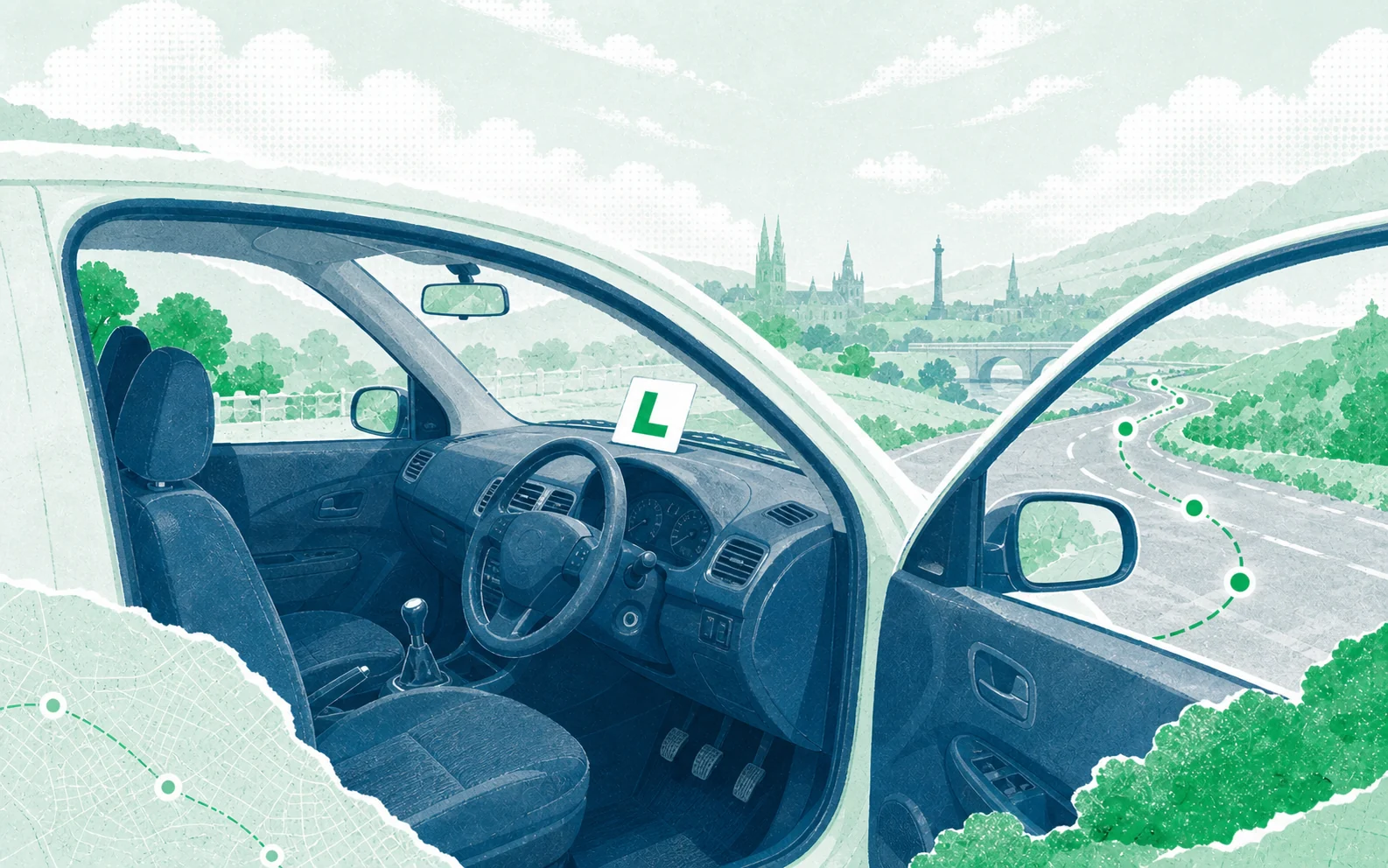
You must display L plates (or D plates in Wales) on the front and rear of the car, and the vehicle must have the correct learner insurance. You cannot drive unsupervised, and you cannot supervise another learner yourself. For the detail on practising legally, see private practice for learner drivers.
What if there is a problem with your application?
Most applications go through without a hitch, but a few need extra checks, usually around identity, medical conditions or a previous licence. If the DVSA needs more information, they will contact you, which can add time, so it is another reason to apply early rather than at the last minute.
You must also declare certain medical conditions that can affect driving when you apply, as this is a legal requirement rather than an optional extra. Declaring a condition does not automatically stop you driving; in many cases the DVSA simply confirms you meet the standards. If you lose your provisional or your details change, such as a new address, you can replace or update it through GOV.UK for a small fee, and you must keep the address on your licence current. If in doubt about your specific circumstances, check the guidance on GOV.UK directly rather than relying on third-party sites.
What comes after your provisional arrives?
Once your provisional is in hand, you can book lessons, start private practice, and prepare for the theory test. Many learners begin lessons and theory revision in parallel so neither holds the other up.
Your first move is usually to find an instructor and get your first lesson booked. Take some time over this choice, since a well-matched instructor makes a real difference to how quickly and confidently you learn; our guide to choosing a driving instructor covers what to look for. When you are ready, find a local instructor on Passly and book your first lesson online, then read what to expect from your first driving lesson so you know exactly what is coming.