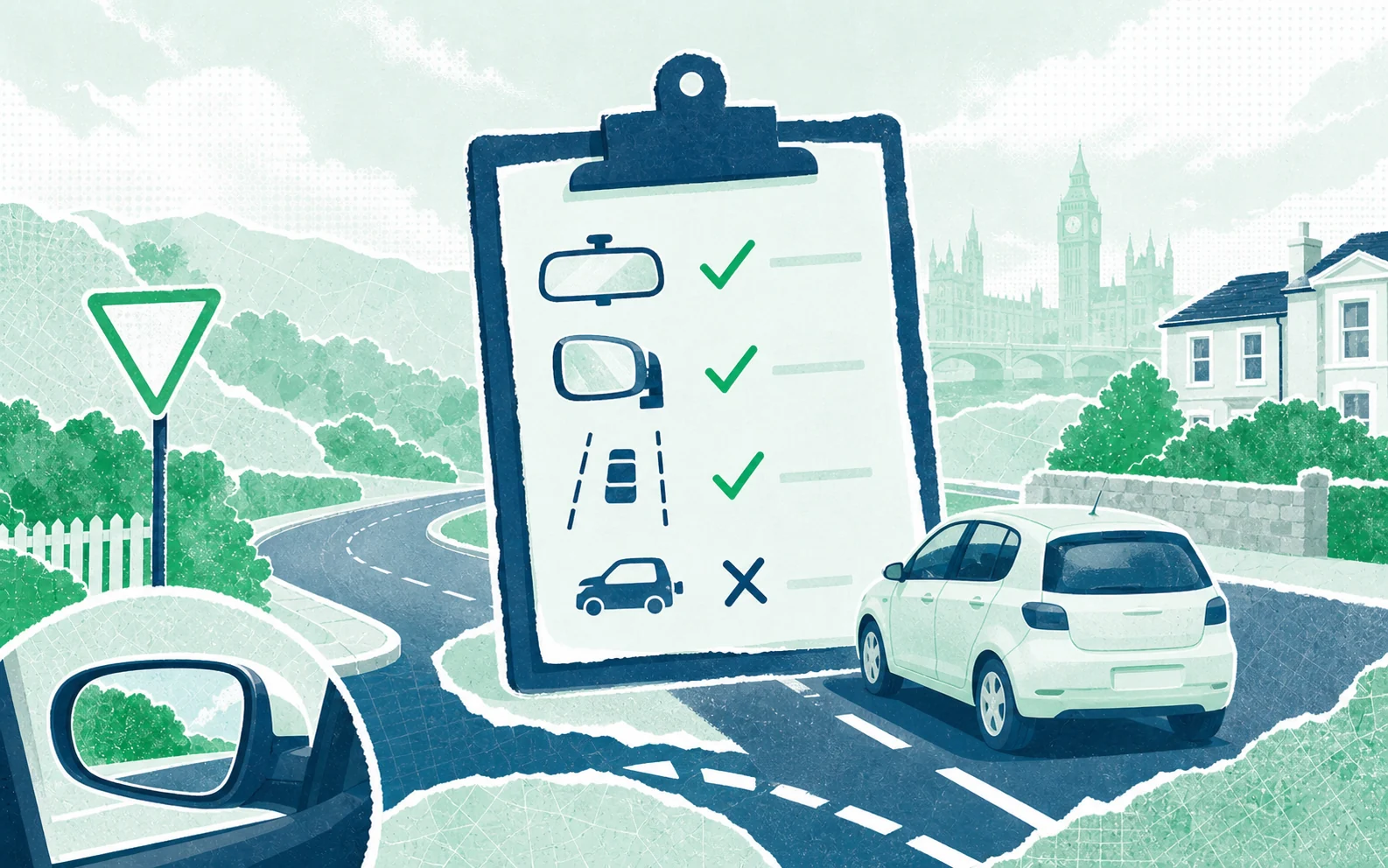
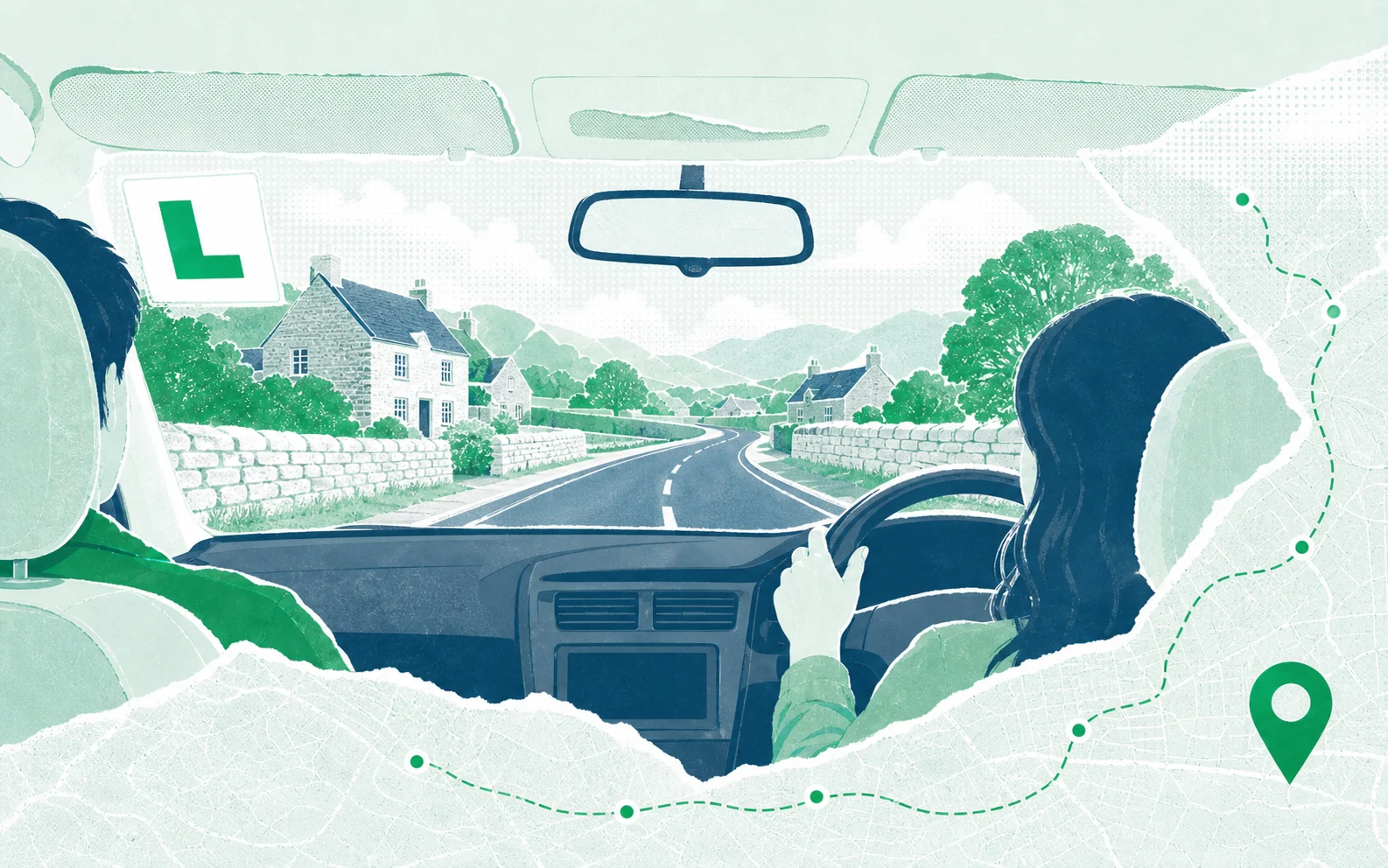
Private practice lets a learner driver build experience between professional lessons, and it is the most effective way to cut both the time and cost of learning to drive. To practise legally, your supervisor must be at least 21 and have held a full licence for that type of vehicle for at least three years, the car must display L plates, and you must be covered by proper learner insurance. Used well, it reinforces what your instructor teaches.
Done properly, private practice can dramatically speed up your progress. Done carelessly, it can bake in bad habits that cost you lessons to fix later. This guide covers the rules, the insurance options, and exactly what to practise so every supervised hour counts.
What are the rules for private practice?
You can practise in a private car once you hold a provisional licence and have someone qualified to supervise you. The supervisor must be aged 21 or over and have held a full driving licence for the same category of vehicle, a car in most cases, for at least three years. They sit in the front passenger seat and are legally responsible for the vehicle while you drive.
The car must display clearly visible L plates (or D plates in Wales) on the front and rear whenever you are driving, and it must be insured for you as a learner. You can practise on almost any road, but not on the motorway; learner drivers may only use motorways when accompanied by an approved driving instructor in a car with dual controls. Everything else, including dual carriageways and busy town roads, is allowed with a supervising driver.
Who can supervise a learner driver?
Legally, anyone aged 21 or over who has held a full licence for the relevant category for three or more years can supervise you. In practice, the right supervisor is someone calm, patient and confident behind the wheel, because they need to read the road ahead, anticipate hazards and guide you without panicking. A nervous or impatient supervisor can undo the confidence your instructor has built.
Your supervisor must also stay in a fit state to drive throughout, so the same rules on alcohol and phone use that apply to any driver apply to them. They should not be using a handheld phone or be over the drink-drive limit while supervising. Choose a family member or friend who takes the responsibility seriously, and ideally brief them on what your instructor is currently teaching so their guidance matches your lessons.
What insurance do you need?
The car must be insured specifically to cover you driving as a learner. There are two main options, and the right one depends on whose car you are using and how often you will practise.
| Option | How it works | Best for |
|---|---|---|
| Named learner on owner’s policy | You are added to the car owner’s existing insurance as a learner driver | Regular practice in a family member’s car |
| Short-term learner insurance | A standalone policy covering you for a set period, from a day to several months | Protecting the owner’s no-claims bonus, or flexible practice |
Short-term learner policies are popular because if you have an incident, the claim usually does not affect the car owner’s no-claims discount, since you are insured separately. Whichever route you choose, make sure the cover is genuinely in place before you drive; practising without correct learner insurance is illegal and uninsured. Always check the policy specifies learner cover, not just any-driver cover.
What should you practise, and what should you not?
Use private practice to consolidate skills your instructor has already taught, not to learn brand-new ones. If you try to teach yourself a manoeuvre from scratch, you risk building a flawed technique that your instructor then has to unpick, which wastes lesson time. The golden rule is: learn it in a lesson, then reinforce it in private practice.
Good things to practise between lessons include:
- Clutch control and smooth moving off, so it becomes second nature and you stop stalling.
- Junctions and observation, the area examiners fault most often, on roads you find manageable.
- Roundabouts, positioning and lane discipline once your instructor is happy with the basics.
- Everyday routes such as the school run or shops, to build real-world confidence.
- Reversing manoeuvres only after your instructor has taught the correct method.
Build up gradually. Start on quiet roads and progress to busier ones as your confidence grows, and keep sessions frequent rather than marathon. Short, regular drives embed skills better than the occasional long one. For a fuller picture of how practice fits the wider journey, read how to learn to drive and how many driving lessons you need.
How much private practice should you do?
DVSA guidance points to around 22 hours of private practice alongside roughly 45 hours of professional lessons before most learners are test-ready. That is an average, not a target: the more quality practice you do, the fewer paid lessons you are likely to need, because every supervised hour is real experience you have not paid an instructor for.
Aim for consistency. A couple of shorter sessions each week, reinforcing whatever your instructor covered most recently, is far more valuable than an occasional three-hour drive. Keep the practice deliberate: pick something to work on each time rather than just driving around. This is also the single biggest lever on the total cost of learning to drive, so it pays off twice.
How does private practice work alongside lessons?
Private practice and professional lessons are partners, not substitutes. Your instructor teaches each skill correctly, structures your learning, and knows exactly what the practical test requires; private practice gives you the volume of experience that turns those skills into confident, automatic driving. Relying on practice alone risks ingraining habits that will cost you faults on test day.
The most cost-effective and reliable route is to keep taking regular lessons while practising as much as you safely can in between. Ask your instructor at the end of each lesson what to focus on before the next one, so your practice and tuition pull in the same direction.
How do you stay safe during private practice?
Treat every private session with the same seriousness as a lesson. Choose quiet times and roads that match your current level, and build up only when you are genuinely comfortable, not to impress your supervisor. Keep sessions to a length where your concentration stays sharp; tiredness is when mistakes and bad habits creep in. If a route or situation feels beyond you, save it for a lesson where your instructor can talk you through it safely.
Your supervisor plays a big part in safety too. Because they are legally responsible for the car, they need to stay alert, watch the road ahead and give calm, early guidance rather than last-second reactions. Agree beforehand how they will communicate, for example a quiet, clear instruction rather than a sudden grab or shout, so you are not startled at the wheel. Debrief briefly after each drive: what went well and what to raise with your instructor next lesson. This keeps private practice reinforcing the right habits, which is the whole point.
If you have not found an instructor yet, or want one who sets clear practice goals, you can find a driving instructor near you on Passly and book lessons around your practice schedule.