Manual and automatic driving lessons teach the same road skills, but they differ in one decisive way: a manual test pass lets you drive both manual and automatic cars, while an automatic pass restricts your licence to automatics only. Automatics are usually quicker and easier to learn because there is no clutch or gears; manuals keep every future option open. Choose based on the cars you expect to drive.
This guide compares the two on licence rules, cost, difficulty and the shift towards electric cars, then helps you pick the right one before you book your first lesson.
What is the difference between manual and automatic lessons?
The core difference is the licence you end up with. Pass your practical test in a manual car and your full licence covers manual and automatic vehicles. Pass in an automatic and your licence is restricted to automatics until you take a further manual test.
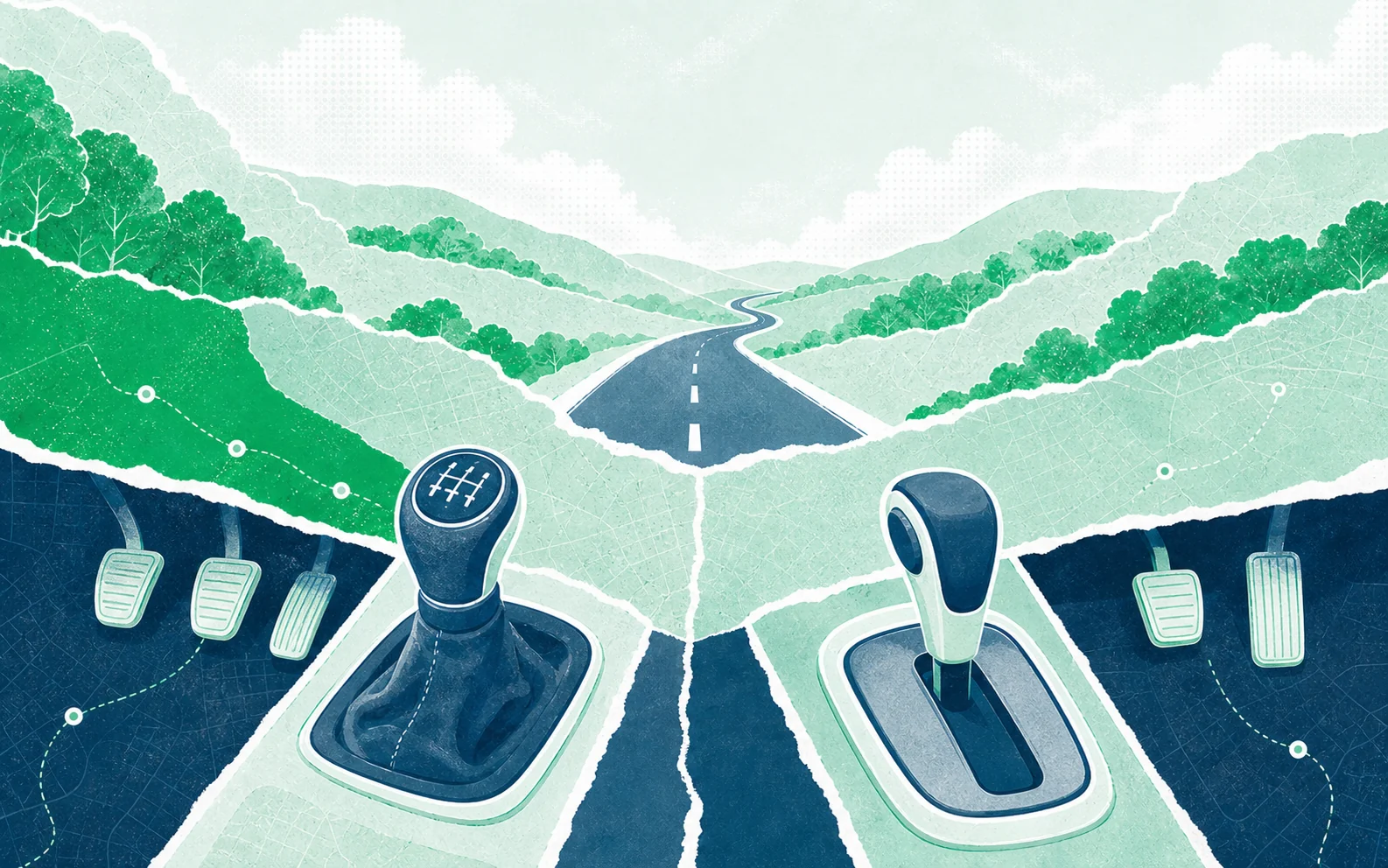
In the car itself, a manual has a clutch pedal and a gearstick you operate yourself; you decide when to change gear and balance the clutch to pull away and slow down. An automatic changes gear for you, so you have only two pedals and can concentrate on steering, mirrors and road position. Everything else you learn is identical in both: junctions, roundabouts, observation, manoeuvres.
Manual vs automatic: side-by-side comparison
Here is how the two options compare across the factors that matter most when you are deciding.
| Factor | Manual | Automatic |
|---|---|---|
| What your licence covers | Manual and automatic cars | Automatic cars only |
| Difficulty to learn | Steeper: clutch and gears to master | Gentler: no clutch or gears |
| Typical lessons needed | More on average | Often fewer |
| Lesson price per hour | Standard | Sometimes slightly higher |
| Choice of tuition cars | Wide | More limited |
| Suits electric/hybrid future | Yes, plus older cars | Yes, matches most EVs |
| Upgrading later | Not needed | Requires a further manual test |
| Resale of skills | Broadest flexibility | Fine if you stay automatic |
Treat this as a starting point rather than a verdict: the right choice depends on your circumstances, which the sections below unpack.
Is it easier to learn in an automatic?
Yes, most learners find automatics easier. Removing the clutch and gearstick takes away the two things new drivers most often struggle with: stalling and coordinating the clutch with the accelerator. That frees up attention for observation, steering and judgement, which are the skills the test really cares about.
The practical upshot is that many people reach test standard in fewer hours in an automatic. That does not make it the right call for everyone, but if you are anxious, short on time, or have found clutch control frustrating in early lessons, an automatic can be a faster and less stressful route to a pass. If nerves are your main concern, our guide to driving test nerves covers evidence-based ways to manage them whichever car you choose.
Are automatic driving lessons more expensive?
Per hour, automatic lessons are sometimes a little dearer because automatic tuition cars are less common, so instructors who offer them can charge a small premium. But price per hour is the wrong number to fixate on. What matters is the total cost to pass, which is hourly rate multiplied by the number of hours you need.
Because many learners need fewer automatic lessons, the total can come out similar to or lower than a manual, even at a higher hourly rate. When you compare instructors, ask for both the hourly price and a realistic estimate of how many hours someone at your stage tends to need. Our guide to how much driving lessons cost breaks down typical prices and the total cost to pass.
Should you learn automatic because of electric cars?
If your driving future is electric, automatic makes sense. Nearly all electric cars and most hybrids are automatic, so an automatic-only licence already covers a large and growing share of the cars on UK roads. For a learner who expects to drive electric from the start, the traditional worry about an automatic licence being limiting matters far less than it used to.
The counter-argument is flexibility. A manual licence still lets you drive everything: older petrol and diesel cars, many work vans, cheaper used cars and manual hire cars abroad. If there is any chance you will need to drive a manual (a family car, a job that provides a van, a trip overseas), passing in a manual now saves you a second test later.
The used car market is worth a thought too. For now, manual cars are more plentiful and often cheaper to buy second-hand than automatics, so a first-time driver on a budget may find more affordable options with a manual licence. That balance is slowly shifting as more automatics and electric cars enter the used market, but it has not flipped yet.
Does the transmission change how the driving test works?
No. The practical driving test is identical in structure whether you take it in a manual or an automatic. You face the same eyesight check, the same show me, tell me questions, the same manoeuvres, the same independent driving and the same faults system in both. The only difference is that in a manual you can also pick up faults related to clutch control and gear selection, such as stalling or coasting.
That is one reason automatics can be a slightly gentler test experience: there are simply fewer things that can go wrong. Whichever you choose, the standard you are held to is the same, and the pass is worth exactly as much: the licence category is the only thing that differs. Our practical driving test guide walks through the test in full for either transmission.
Who should choose manual and who should choose automatic?
Pick the option that matches how you will actually drive, not what other people did.
Choose manual if you:
- Want a licence that lets you drive any car
- Might drive an older or borrowed manual, a work van or a hire car abroad
- Are happy to invest a few more lessons for that flexibility
- Are buying a used car, where manuals are cheaper and more plentiful
Choose automatic if you:
- Plan to drive electric or hybrid now or soon
- Want the quickest, least stressful route to a pass
- Have struggled with clutch control or stalling
- Value fewer things to manage, especially if you are a nervous learner
There is no universally correct answer, only the one that fits your life. If you are still unsure, book a single taster lesson in each and let the cars decide for you.
How do you find the right instructor for either option?
Not every instructor offers automatic tuition, so decide manual or automatic first, then filter your search accordingly. When you compare instructors, check they teach in your chosen transmission, read their reviews, and ask how many hours learners at your level typically need. Our guide to choosing a driving instructor covers grades, red flags and the questions worth asking.
Once you know which you want, find a local driving instructor on Passly, filter by manual or automatic, and book your first lesson online from their real availability. Whichever you choose, the skills that pass the test are the same: the transmission just changes how you get there.