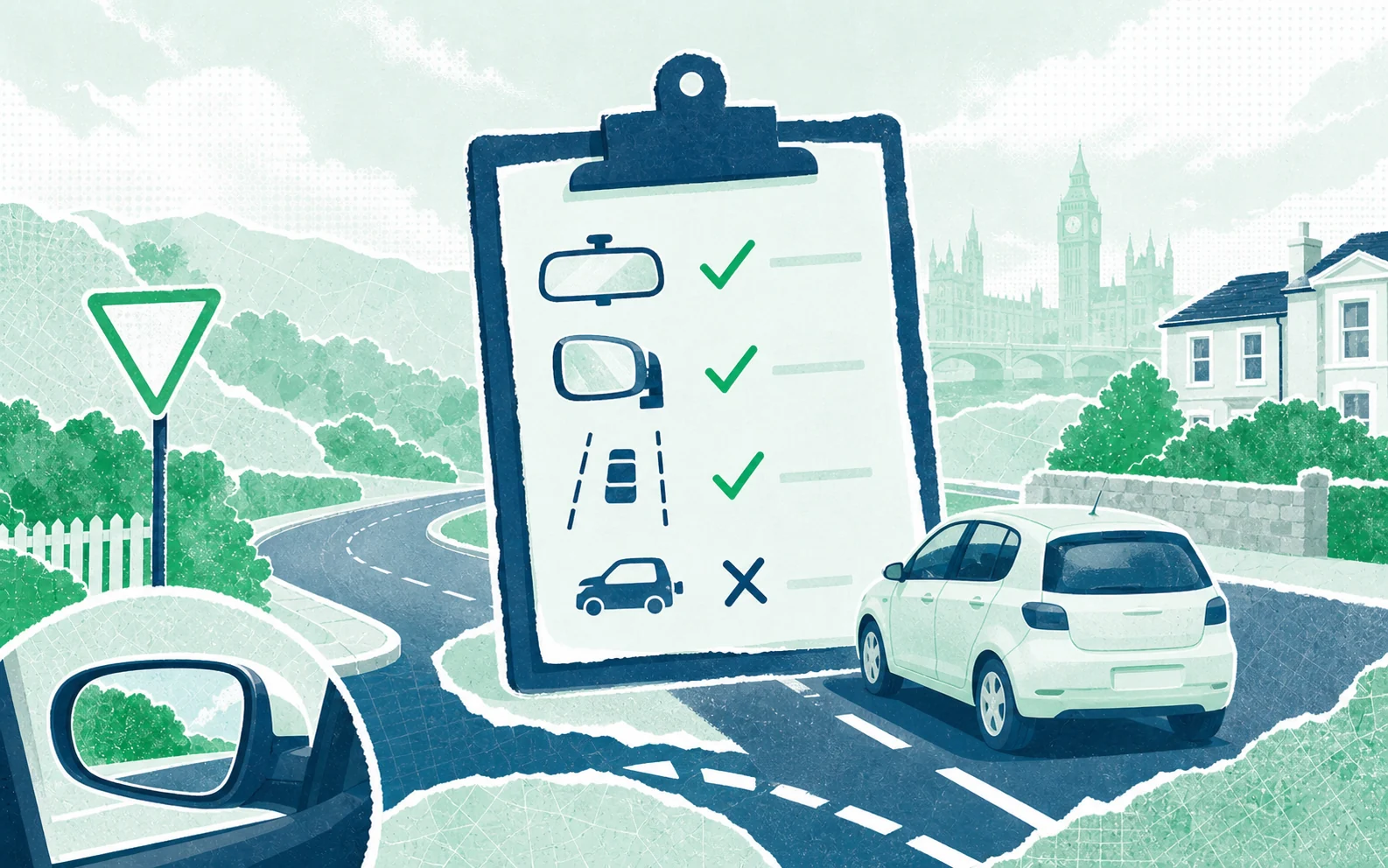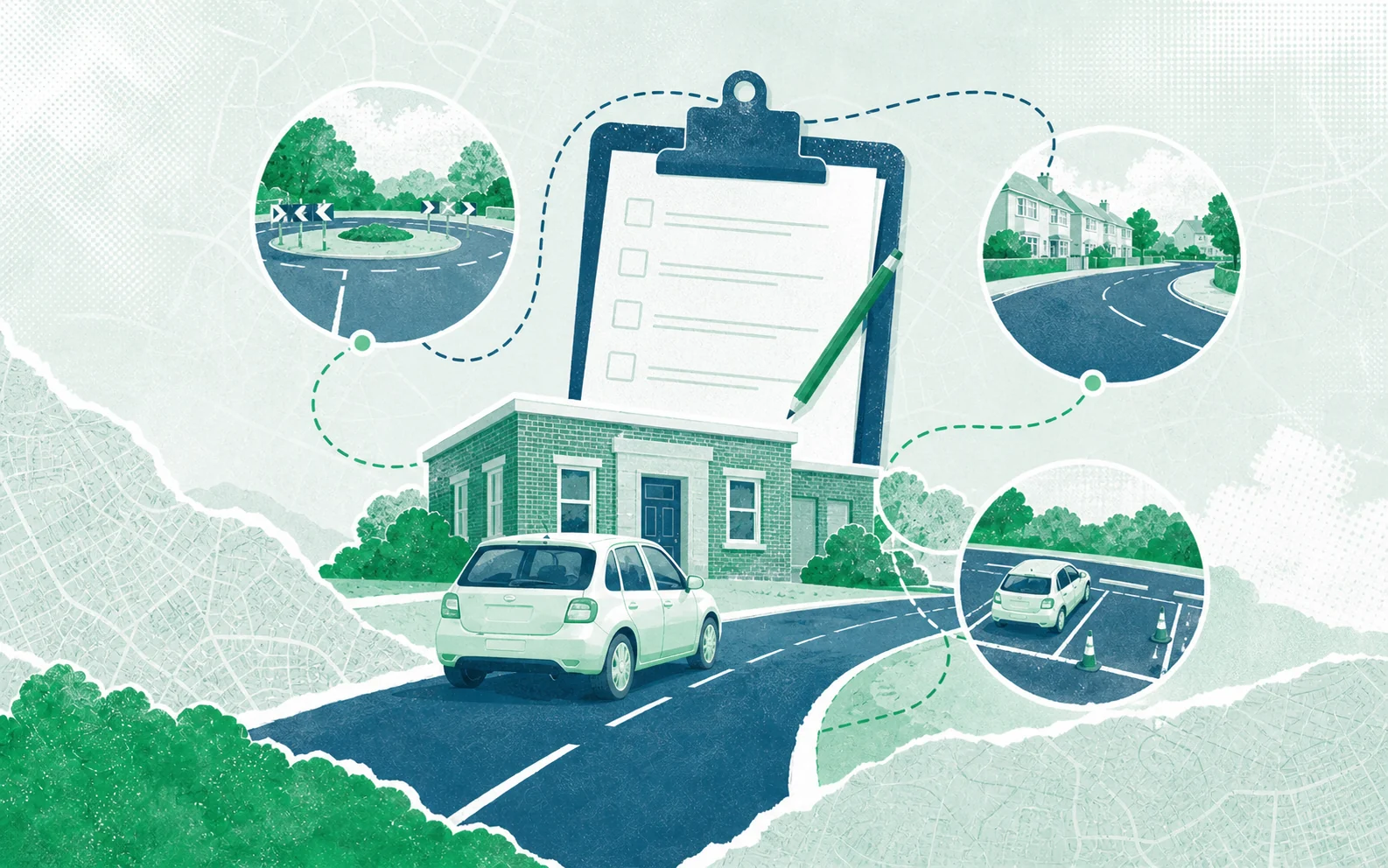
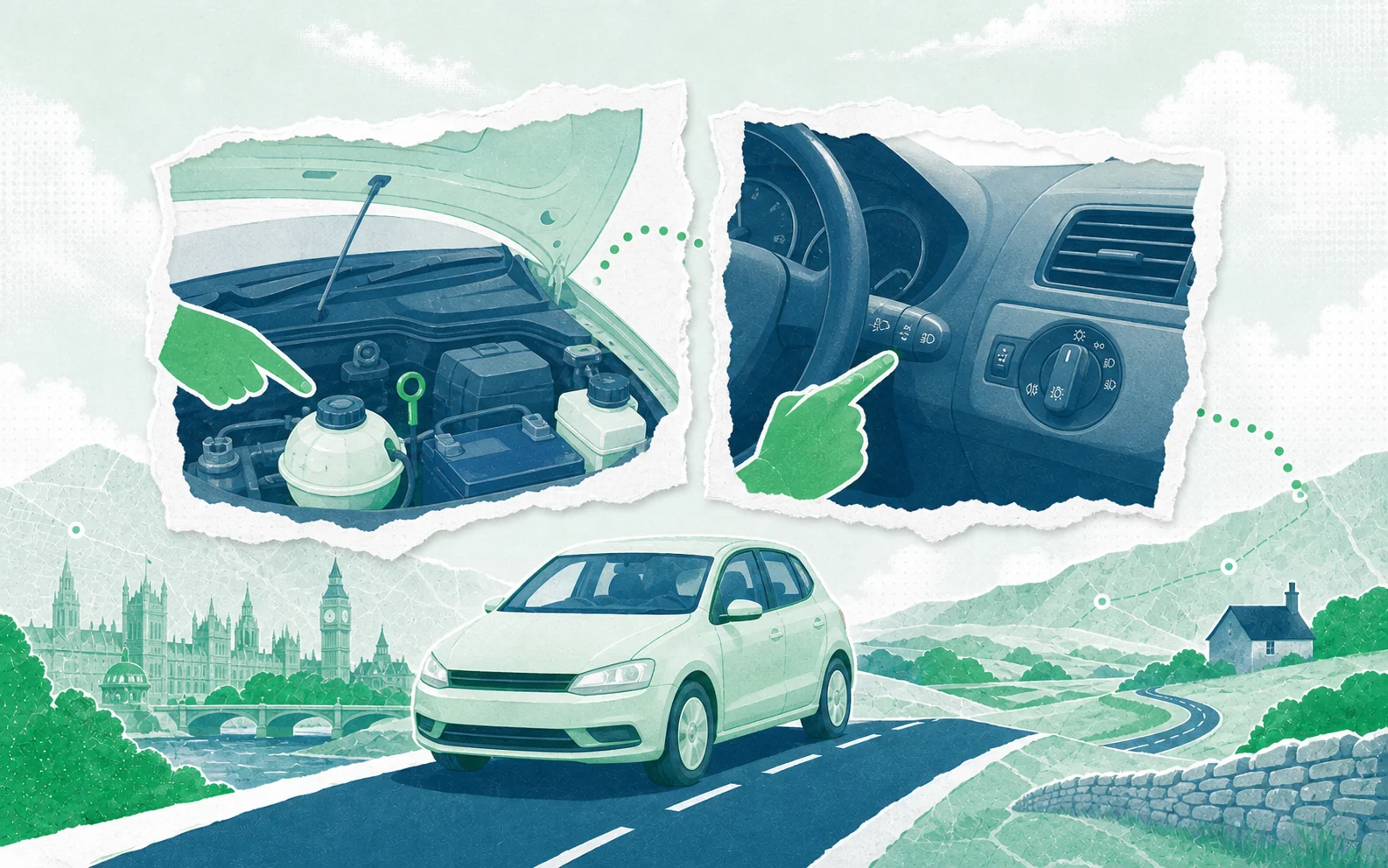
The show me, tell me questions are two vehicle safety questions asked during the UK practical driving test. The examiner asks one “tell me” question before you drive, where you explain how you would carry out a safety check, and one “show me” question while you are driving, where you demonstrate a task such as using the windscreen washer. Getting either or both wrong counts as a single driving fault.
They are one of the easiest parts of the test to nail, because the DVSA publishes every possible question in advance. Learn the answers, practise them in your own test car, and you walk in knowing exactly what you might be asked. This guide explains how the questions work, when they are asked, and how to prepare.
What are the show me, tell me questions?
They are a pair of vehicle safety questions the examiner uses to check you can keep your car roadworthy and operate it safely. “Tell me” questions ask you to explain how you would do something; “show me” questions ask you to actually do it. Between them they cover the everyday checks a responsible driver should be able to perform.
The point is not to test mechanical knowledge. The DVSA wants to see that you understand basic car maintenance and can work your car’s controls without being distracted from driving. You will not be asked to change a tyre or diagnose a fault, only to describe or demonstrate simple, routine tasks.
When are the tell me and show me questions asked?
The “tell me” question comes first, at the very start of your test before you begin driving, usually straight after the eyesight check. You stand or sit by the car and explain to the examiner how you would carry out the safety check they have chosen. Because you are not driving, you can take your time and describe the process fully.
The “show me” question is asked later, while you are driving on the road. The examiner will ask you to demonstrate something, and you carry it out as you drive, keeping full control and attention on the road. For example, if asked to show how you would wash the windscreen, you operate the washer and wipers without stopping or looking away from the road for any length of time.
What happens if you get one wrong?
Getting either question wrong results in one driving (minor) fault. Getting both wrong still only counts as one fault in total, so vehicle safety questions can never fail your test by themselves. This makes them low-risk, but there is no reason to give away even a single fault when the answers are published in advance.
There is one important caveat. The fault applies to the answer itself. If, while demonstrating a “show me” task on the move, you drive unsafely, such as swerving, ignoring a hazard or taking your eyes off the road for too long, the examiner can mark that as a serious or dangerous fault, which would fail the test. So keep the demonstration simple and never let it compromise your driving. For the full picture of how faults are recorded, see our guide to the most common driving test faults.
What are the tell me questions?
“Tell me” questions ask you to explain a safety check verbally. You point to where things are and describe what you would look for, but you do not have to physically perform the check. The DVSA maintains the official list on GOV.UK, and it is updated occasionally, so always revise from the current version. The examples below reflect the long-standing question areas.
| Area | What you explain |
|---|---|
| Engine oil | How you would check the level using the dipstick, against the minimum and maximum marks |
| Coolant | Where the reservoir is and how you would check the level is between the min and max markings |
| Brake fluid | Where the reservoir is and how you would check it is between the marks |
| Tyres | How you would check condition and tread depth (at least 1.6mm across the central three-quarters, all around) |
| Tyre pressure | How you would find the correct pressures and check them with a gauge |
| Head restraint | How you would adjust it correctly for safety |
| Brakes | How you would check they are working, for example as the car begins to move |
| Dashboard warning light | How you would check a light, such as the brake warning light, works |
| Horn | How you would check the horn is working (safe to do off-road) |
| Demisting | How you would set the controls to demist the front and rear screens |
What are the show me questions?
“Show me” questions ask you to operate a control while driving, without stopping and without losing control of the car. The examiner chooses when to ask, so be ready to demonstrate calmly at any point during the drive. Again, the official list lives on GOV.UK; these are the established examples.
| Task | What you demonstrate |
|---|---|
| Windscreen washer and wipers | Clean the windscreen using the washer and wipers |
| Rear demister | Switch on the rear windscreen heater to clear condensation |
| Headlights and rear fog lights | Operate these controls and know when they should be used |
| Windscreen wipers | Set the wipers so you could clear the screen if needed |
| Horn | Sound the horn where it is appropriate to do so |
| Side windows | Demist the side windows using the appropriate controls |
Because these are done on the move, practise until each control is second nature. You should be able to find and operate the washer, wiper, demister and light switches by feel, glancing down only briefly, so your attention stays on the road.
How should you prepare for the show me, tell me questions?
Learn the answers in the exact car you will take your test in. Controls, warning lights and fluid reservoirs are laid out differently in every model, so revising in a generic way is far less effective than practising in your own test vehicle. Ask your instructor to run through both lists with you in the car until you can answer any of them without hesitation.
Keep your explanations short and correct rather than long-winded. The examiner wants to hear that you understand the check, not a lecture. For “show me” tasks, rehearse operating each control while keeping the car in a straight line and your eyes up. As part of overall test preparation, run through these questions during your mock tests so they feel routine on the day, and read the full practical driving test guide to see how they fit into the rest of the test.
Because the DVSA can revise the official lists, always cross-check against the current version on GOV.UK close to your test date. Your instructor will know the latest wording; a good ADI drills these regularly. If you have not booked lessons yet, you can find a driving instructor near you on Passly and get test-ready with someone who prepares pupils for exactly these questions.