The best car for driving instruction is reliable, economical, comfortable for nervous learners and easy to fit with dual controls, rather than any particular model. Small and compact hatchbacks dominate because they are easy to place on the road, cheap to run and simple for beginners. The right choice balances low running costs, good visibility, all-day comfort and proven reliability.
Your car is both your workplace and one of your biggest costs, so choosing it well affects your comfort, your pupils’ progress and your profit. This guide covers what to look for, the manual-versus-automatic decision, dual controls, whether to buy, lease or take a franchise car, and the shift towards automatics and EVs.
What makes a good driving instructor car?
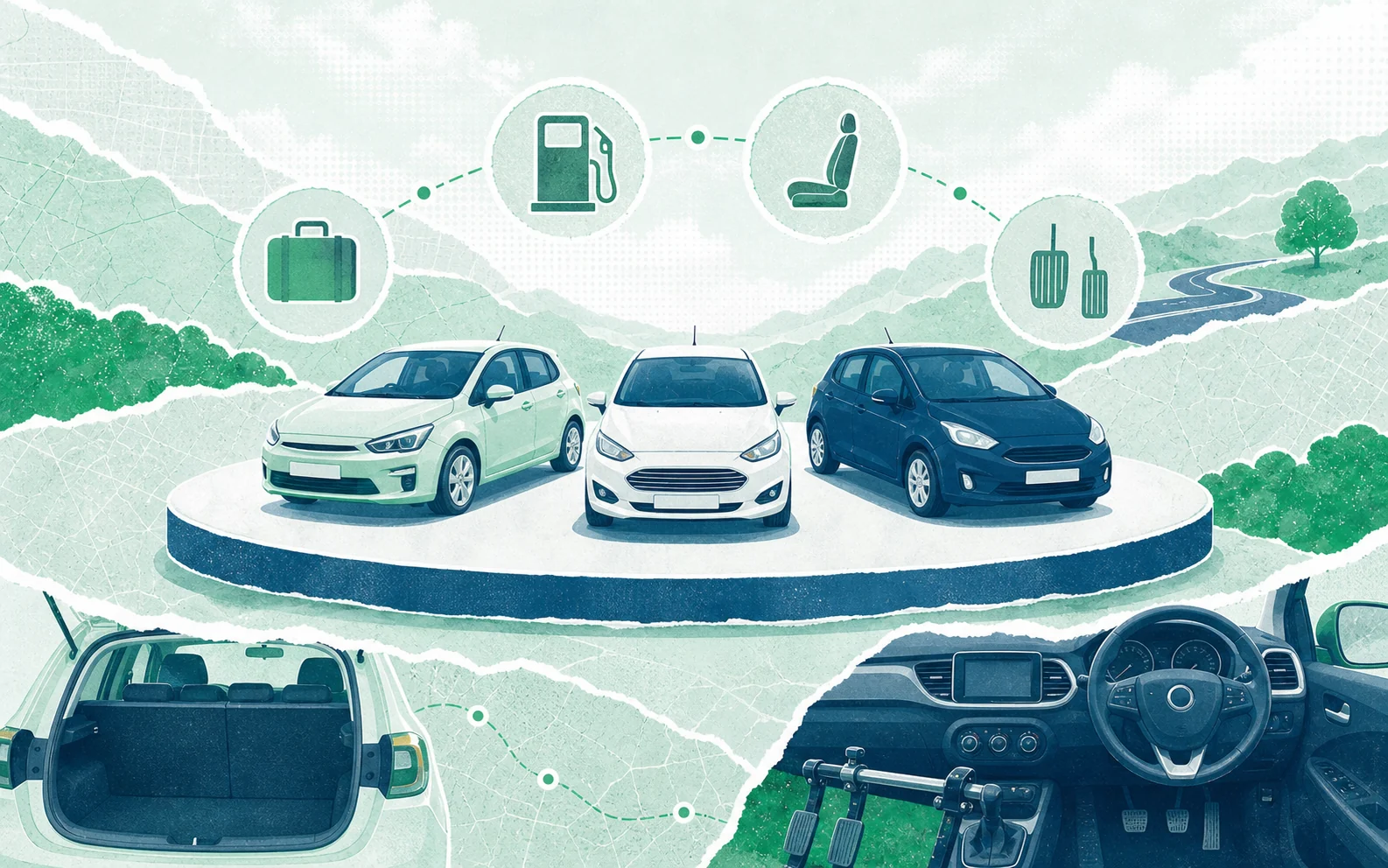
A good tuition car makes life easier for a nervous learner and cheaper for you to run, day after day. It spends far more hours on the road than a private car and is driven by people still learning car control, so durability, forgiveness and low running costs matter more than badge or performance.
The qualities that count most:
- Reliability. Downtime means cancelled lessons and lost income, so a strong reliability record is worth paying for.
- Low running costs. Good fuel economy or cheap charging, affordable servicing and cheap parts protect your margin.
- Visibility. Good all-round visibility helps both you and the pupil judge the road and manoeuvres.
- Size. Small to compact cars are easy for beginners to place and manoeuvre, and easier for you to teach in tight spaces.
- Comfort. You sit in it all day, so a supportive seat and light, forgiving controls reduce fatigue.
- Easy dual-control fitting. A common, popular model is simpler and cheaper to fit dual controls to.
Compact hatchbacks tick most of these boxes, which is why they remain the default choice for instructors across the UK.
Should you choose a manual or automatic car?
Choose based on the pupils you want to teach and what your budget allows. A manual car lets you teach the widest range of learners, because a pupil who passes in a manual can drive both manual and automatic vehicles. That flexibility has kept manuals the traditional choice for most instructors.
Automatics, however, are a rising force. They remove the clutch and gears, so many learners find them easier and progress faster, demand for automatic lessons is growing, and there are fewer automatic instructors in most areas, which lets you charge a small premium. The catch is that automatic and electric cars usually cost more to buy or lease, and a pupil who passes in one gets an automatic-only licence. Many instructors start with a manual for maximum reach and add an automatic as local demand for it grows. Learners weighing the same choice can read our guide to manual versus automatic lessons, which helps you understand the demand side of the decision.
What are dual controls and why do they matter?
Dual controls are a second clutch and brake fitted on the passenger side, letting you intervene instantly when a pupil makes a mistake. They are essential for teaching learners safely and are required for your instructor insurance to cover tuition, so no serious tuition car is without them.
Have them fitted by a specialist, using a reputable brand such as He-Man, and factor both fitting and later removal into your costs. On a bought car you will want them removed before you sell; on a lease you may need the car returned to standard, and on a franchise car they come already fitted. Some instructors also add extra interior mirrors for the pupil and for the examiner. Whatever the car, treat dual controls as a non-negotiable cost of doing business, and confirm your instructor insurance reflects that the car is dual-controlled.
Should you buy, lease or use a franchise-supplied car?
Each route trades upfront cost against flexibility and mileage, so the best choice depends on how you work and how long you keep a car. There is no single right answer, only the one that fits your mileage, budget and appetite for commitment.
| Option | Upfront cost | Best for | Watch out for |
|---|---|---|---|
| Buy outright or on finance | Higher upfront or monthly until paid | High mileage, keeping a car for years | Depreciation; repairs as it ages |
| Lease / contract hire | Lower, predictable monthly payments | Staying in a newer car, spreading cost | Mileage caps and condition charges |
| Franchise-supplied | Bundled into the weekly franchise fee | New instructors wanting no car hassle | Less choice; cost tied to the franchise |
Buying suits instructors who cover high mileage and keep a car for years, because there is no mileage limit and no payment once it is paid off, though you carry depreciation and ageing-car repairs. Leasing keeps payments predictable and you in a newer car, but a tuition car racks up miles fast, so watch the mileage cap and end-of-lease condition charges closely. A franchise car removes the decision entirely, at the cost of choice and with the expense folded into your franchise fee. Weigh the franchise route with our franchise versus independent guide and its cost calculator before committing.
What are the running costs to budget for?
Budget for far more than fuel: a tuition car’s total running cost includes finance or lease payments, fuel or charging, insurance, dual controls, servicing, tyres and cleaning, and all of it should be built into your hourly rate. Because the car works so hard, wear items like tyres, brakes and clutches wear faster than on a private car.
The main ongoing costs to plan for are:
- Finance or lease payments, or the depreciation on a car you own.
- Fuel or charging, which favours economical or electric cars given your mileage.
- Insurance, using a specialist ADI policy, as covered in our insurance guide.
- Servicing, tyres and brakes, which come round faster with heavy use.
- Dual-control fitting and removal, and cleaning to keep the car presentable.
Most of these are allowable business expenses, so keep every receipt and log your mileage. Our expenses guide lists what you can claim, and pricing the true cost of the car into your lessons, as our guide to setting lesson prices explains, stops the car quietly eroding your profit.
Are electric and automatic cars the future of tuition?
The direction of travel is clearly towards automatics and EVs, as more learners choose automatic lessons and the wider car market shifts away from combustion engines. Electric cars are smooth and simple for beginners, with no clutch or gears to manage, and their low cost per mile can offset a higher purchase price over the many miles a tuition car covers.
The trade-offs are real, though: EVs cost more upfront, need charging planned around a busy diary, and, like any automatic, leave a pupil with an automatic-only licence. For now, many instructors hedge by keeping a manual for reach while adding an automatic or electric car as demand grows. Whichever way you go, choose a reliable, economical car sized for learners, get quality dual controls fitted, insure it correctly and price its full cost into your lessons. When you are ready to manage the bookings that keep that car earning, you can start free with Passly.