
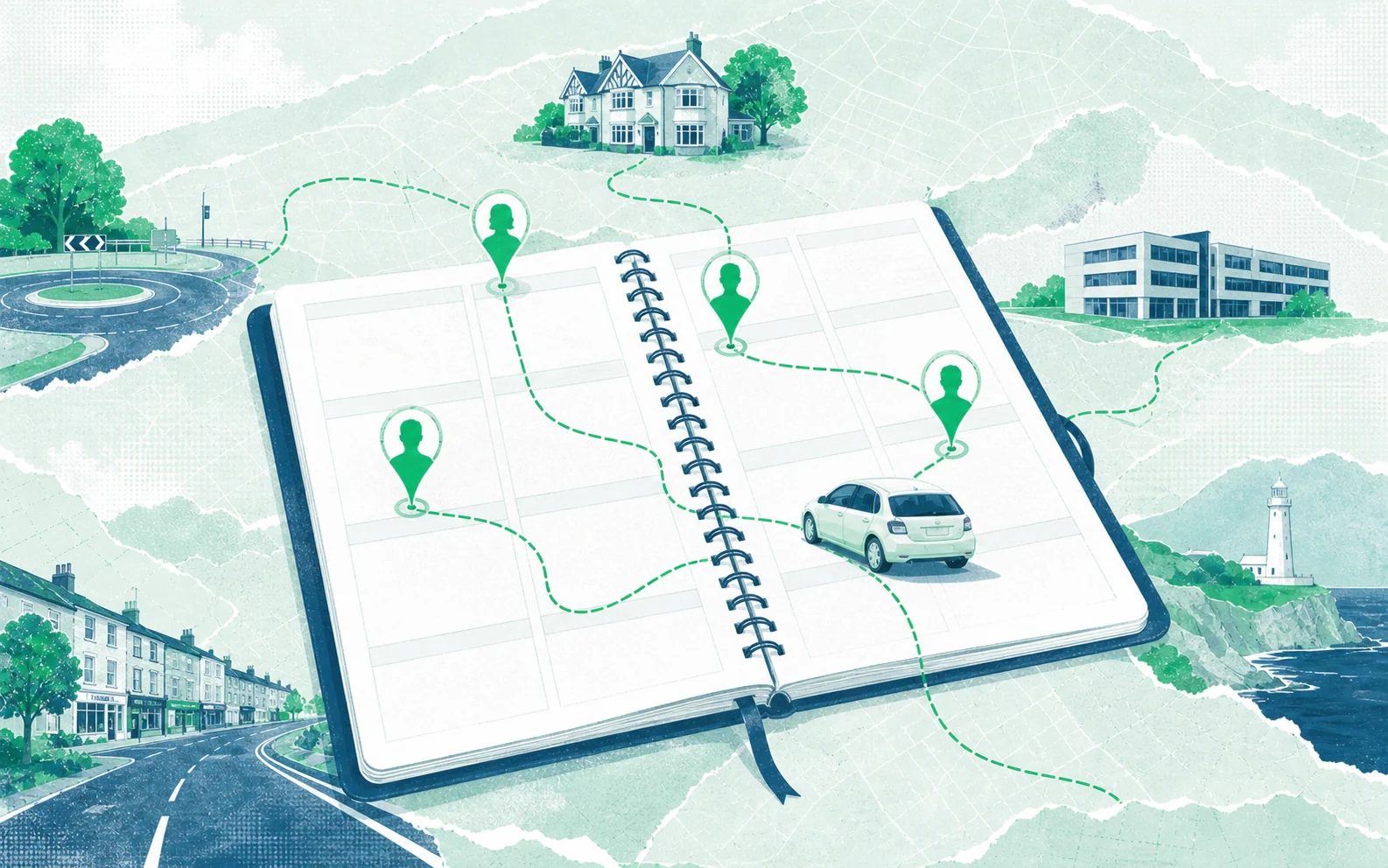
Good diary management for a driving instructor comes down to four habits: cluster pupils who live near each other into the same part of the day to cut unpaid mileage, leave buffer time between lessons, use recurring bookings so regular pupils hold a fixed weekly slot, and protect your evenings and weekends deliberately. A digital diary that pupils book into removes most of the manual juggling.
Your diary is your business. How well you organise it decides your real hourly earnings, how punctual and unstressed you are, and whether the job is sustainable or slowly burns you out. This guide covers the practical routing, timing and time-protection habits that make a diary work for you.
Why does diary management matter so much for instructors?
Because your diary directly controls both your income and your quality of life. Two instructors charging the same hourly rate can earn very different amounts once you account for dead mileage, gaps and no-shows, and can feel completely different levels of stress depending on how their days are shaped. The diary is where all of that is won or lost.
The trap is treating the diary as a passive record of whatever bookings come in, rather than something you actively design. An instructor who lets pupils dictate scattered times across the map spends half the day driving unpaid and never gets a proper break. One who shapes the week deliberately, grouping and spacing lessons on purpose, teaches more paid hours with less driving and still protects time off. The rest of this guide is about designing rather than reacting.
How do you cut dead mileage between lessons?
Cluster pupils geographically so consecutive lessons are in the same area, and plan the day so you move across your patch in one direction rather than zig-zagging back and forth. Dead mileage, the unpaid driving between pupils, is one of the quietest drains on an instructor’s earnings, and clustering is the main way to shrink it.
Think of your working area in zones and try to fill a morning or an afternoon within one zone before moving to the next. When a new pupil enquires, factor in where they live relative to the pupils around the slot they want, and offer times that keep your day tight. A lesson that pays well on paper can lose much of its value if it sits alone across town from everything else that day. Planning routes that flow logically also leaves you calmer and more punctual, and it dovetails with the pupil-facing side of a well-run diary covered in our guide to reducing no-shows and cancellations. Managing all of this visually is exactly what the lesson calendar is built for.
How much buffer time should you leave between lessons?
Enough to cover travel to the next pupil, absorb small overruns, and log a few notes, usually a short consistent gap between lessons. Booking lessons truly back to back with no gap means any delay early in the day cascades through every appointment after it, and you spend the whole day chasing your tail.
A modest buffer does three jobs. It gets you to the next pupil on time even if the last lesson ran a few minutes over or traffic was bad. It lets you record what the pupil worked on while it is fresh, rather than trying to reconstruct six lessons from memory at night. And it gives you a moment to reset between pupils so you arrive focused rather than frazzled. The exact length depends on how spread out your pupils are, but the principle holds: a diary with no slack is a diary that runs late and stresses you out. Build the buffer in as a standing rule, not something you add only when you remember.
How do recurring bookings help?
Recurring bookings reserve the same weekly slot for a regular pupil automatically, giving you a stable backbone to build the rest of your week around. Instead of rebooking each pupil by hand every week, their Tuesday 5pm simply repeats, and the slot is protected so no one else can take it.
The benefits compound. Your income becomes more predictable because a core of your diary is locked in weeks ahead. Your planning gets easier because you are only fitting new and occasional pupils around a fixed skeleton rather than rebuilding the whole week each time. And pupils benefit too: a consistent weekly lesson is better for learning than sporadic bookings, and knowing their slot is reserved reassures them. Passly supports recurring lessons, so you set the pattern once and it holds. Regular slots also aid retention, because a pupil with a standing weekly lesson is far more likely to keep progressing to test, as our guide to keeping pupils until test explains.
How do you protect your evenings and weekends?
Set your working hours in your diary and treat time off as fixed, so bookings can never be made outside the hours you have chosen. The most common way instructors lose their evenings and weekends is by leaving them technically available and then saying yes one pupil at a time until there is nothing left.
Decide your genuine working pattern and encode it. If you do not want to teach past 7pm, or you keep Sundays free, block those times so your online booking simply never offers them and you are not put in the position of declining pupils individually. Treat a planned day off like any other fixed appointment: it is not a slot you will surrender if someone asks nicely. This matters because the job has no natural end to the day; demand will happily expand to fill every hour you leave open, and only you will stop it. Protecting rest deliberately is what keeps the career sustainable over years rather than months.
How do you avoid double-booking yourself?
Work from a single source of truth for your availability, so that the moment a slot is booked it disappears from what anyone else can choose. Double-bookings happen when your real schedule lives in your head or a paper diary while pupils are contacting you across texts, calls and messages, and two requests for the same time slip through.
The fix is a diary and booking system that share the same live availability. When pupils book from your genuine free slots, a confirmed lesson instantly removes that time from the options everyone else sees, so the same hour cannot be taken twice. It also spares you the constant back-and-forth of “are you free Thursday?” messages, because pupils can see for themselves. Passly’s online booking works directly from your live lesson calendar and working hours, which removes both the double-booking risk and a large slice of the admin that comes with running your diary by hand.
Designing a diary that works for you
A well-run diary is not luck; it is a set of deliberate choices repeated every week. Cluster pupils geographically to keep your paid hours high and your unpaid driving low, leave consistent buffer time so your days run on time and your notes get done, use recurring bookings to give the week a stable spine, and protect your evenings and weekends before demand eats them. Run all of that from a single live calendar that pupils book into and you spend less time on admin and more time teaching. When your diary is this tight, the next lever on your earnings is usually your rates and your pupil numbers, covered in how to set lesson prices and how to get more pupils.