
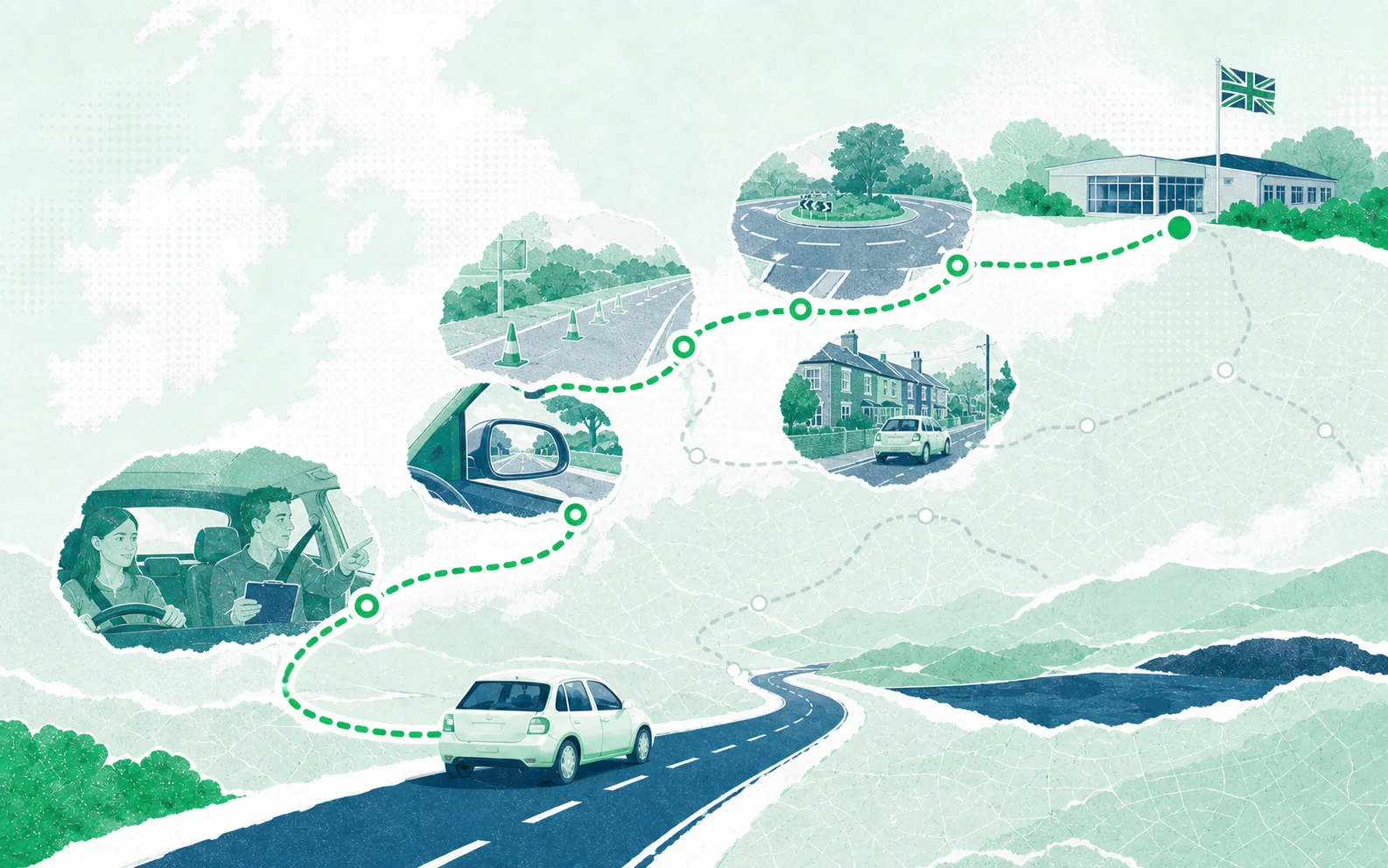
To keep pupils until test, make their progress visible and their path clear: teach from a structured syllabus, track and share what each pupil has covered, agree goals every lesson, run mock tests as the test nears, communicate with parents of younger learners, and give pupils a portal where they can see it all. Pupils stay when learning feels structured and measurable, and drift when it feels aimless.
Losing a pupil halfway to test is expensive: you forfeit all the future lessons, the test-day work and the recommendations that pupil would have brought. This guide covers the practical retention habits that keep learners with you from first lesson to full licence.
Why do pupils leave before they pass?
Pupils leave when they stop feeling they are getting somewhere, not usually because of price. A learner who cannot tell whether they are improving, whose lessons feel repetitive or unplanned, or who has no sense of how close they are to test, starts to wonder if a different instructor would be faster, and drifts away.
Almost every retention problem is really a confidence and clarity problem. The two questions in every learner’s head are “am I actually getting better?” and “how much longer is this going to take?”. If your teaching answers both, clearly and continuously, the pupil has no reason to leave. If it leaves them guessing, no amount of good driving instruction will fully compensate, because the pupil cannot see the value they are getting. Retention, then, is largely about making progress and structure visible, which is what the rest of this guide is about.
How does a structured syllabus keep pupils?
A structured syllabus turns learning to drive from an open-ended commitment into a journey with a visible route and a destination. When a pupil can see the ordered list of skills they will cover, from moving off to independent driving, each lesson feels like a step along a plan rather than another open-ended hour.
Structure also protects you against the aimless-lesson trap, where sessions blur into one another and neither of you is quite sure what is being worked on. Teaching to a syllabus means every lesson has a place and a purpose, builds logically on the last, and moves the pupil demonstrably closer to test. That sense of forward motion is one of the strongest reasons pupils stay. It pairs naturally with client-centred goal setting, where you agree each lesson’s aim with the pupil against the wider plan, an approach our guide to client-centred learning covers in full.
Does progress tracking really improve retention?
Yes, because it makes the invisible visible. When a pupil can see skills ticked off against a syllabus and watch the list of things they can do grow week by week, learning feels tangible and motivating instead of a bottomless expense. It answers “how am I doing?” continuously, without an awkward conversation.
Progress tracking also underpins trust in your judgement. A pupil who can see they have covered most of the syllabus and are consolidating the last few skills understands why you say they are nearly ready, and equally why you say they are not. That shared, evidence-based picture stops the second-guessing that sends pupils shopping around. Passly’s progress tracking lets you record what each pupil has covered lesson by lesson and share it with them, so the progress you can see is progress they can see too. For anxious learners in particular, that visible evidence of improvement is reassuring, as our guide to teaching nervous pupils describes.
How do goals each lesson keep pupils engaged?
Agreeing a clear goal at the start of every lesson gives the pupil something concrete to aim for and a way to feel the session was worthwhile. A lesson with an explicit aim, worked on and then reviewed, leaves the pupil with a sense of achievement; a lesson that just happens leaves them unsure what they got for their money.
Set goals with the pupil rather than for them, tying each one to where they are in the syllabus and what they want to improve. At the end, reflect together on how it went and set up the next step. This rhythm of aim, attempt, review does two things for retention: it makes progress feel deliberate and owned, and it constantly reinforces that you have a plan for them. Pupils rarely leave an instructor who clearly knows exactly what they are working on next.
Why do mock tests help you keep pupils to test?
Mock tests give a pupil an honest, concrete read on how ready they are, which builds both confidence and trust in your timing. Instead of a vague worry about whether they are good enough, the pupil gets specific feedback on exactly which faults to fix, and lessons in the run-up gain a sharp sense of purpose.
That matters for retention in the final, wobbly stretch before test, where pupils are most tempted to either rush ahead prematurely or lose their nerve. A pupil who has sat realistic mocks understands why you recommend booking the test now, or waiting a little longer, and is far less likely to peel off to another instructor or a quick-fix intensive course. Mocks also mean fewer failed tests, and a pupil who passes on your watch becomes a recommendation rather than a cautionary tale. Share our learner guides to common driving test faults and driving test nerves with pupils to reinforce your mock feedback between lessons.
Should you communicate with parents of younger learners?
For younger learners, yes, with the pupil’s agreement, because parents usually pay for and coordinate the lessons and their reassurance keeps the pupil booked. A parent who can see structured progress and understands roughly how many lessons remain stays supportive; one left in the dark about cost and progress becomes anxious and may pull the plug.
Keep the pupil at the centre and respect their independence and privacy, but do not treat the paying parent as irrelevant. Being clear and proactive about how the learner is progressing, what is left to cover, and why you teach the way you do turns parents into allies rather than sources of pressure. A short, honest update at sensible moments prevents the “why is this taking so long and costing so much?” conversation that ends a lot of pupil relationships prematurely. A pupil portal that a learner can choose to show a parent makes this transparency effortless.
How does a pupil portal aid retention?
A pupil portal, a web dashboard where the learner sees their lessons, progress and account in one place, makes the whole experience feel organised and professional, which is exactly what makes a pupil want to stay. It removes friction and quietly signals that they are with a well-run instructor worth sticking with.
Practically, the portal lets a pupil see upcoming lessons, review the progress you have recorded, and handle booking and rebooking without a flurry of messages. That convenience matters, because clunky admin is itself a reason pupils drift. But the bigger effect is perception: an instructor whose pupils get a tidy digital dashboard feels more established and more trustworthy than one running everything through scattered texts. Passly gives every pupil a pupil portal tied to your diary and progress tracking, so the structure you have built into your teaching is something the pupil experiences directly, every time they log in.
Retention is a system, not a personality
Keeping pupils to test is not about being the most charismatic instructor; it is about running your teaching so that progress and structure are impossible to miss. Teach from a syllabus, track and share progress, set goals every lesson, use mock tests to prove readiness, keep parents of younger learners onside, and give pupils a portal that ties it together. Do that and pupils stay because they can see they are getting somewhere with someone who has a plan for them, and they pass and recommend you. It works best alongside a well-run diary, covered in our guide to driving instructor diary management, and the messaging and reminders that keep pupils turning up in the first place.